Photo info
Description
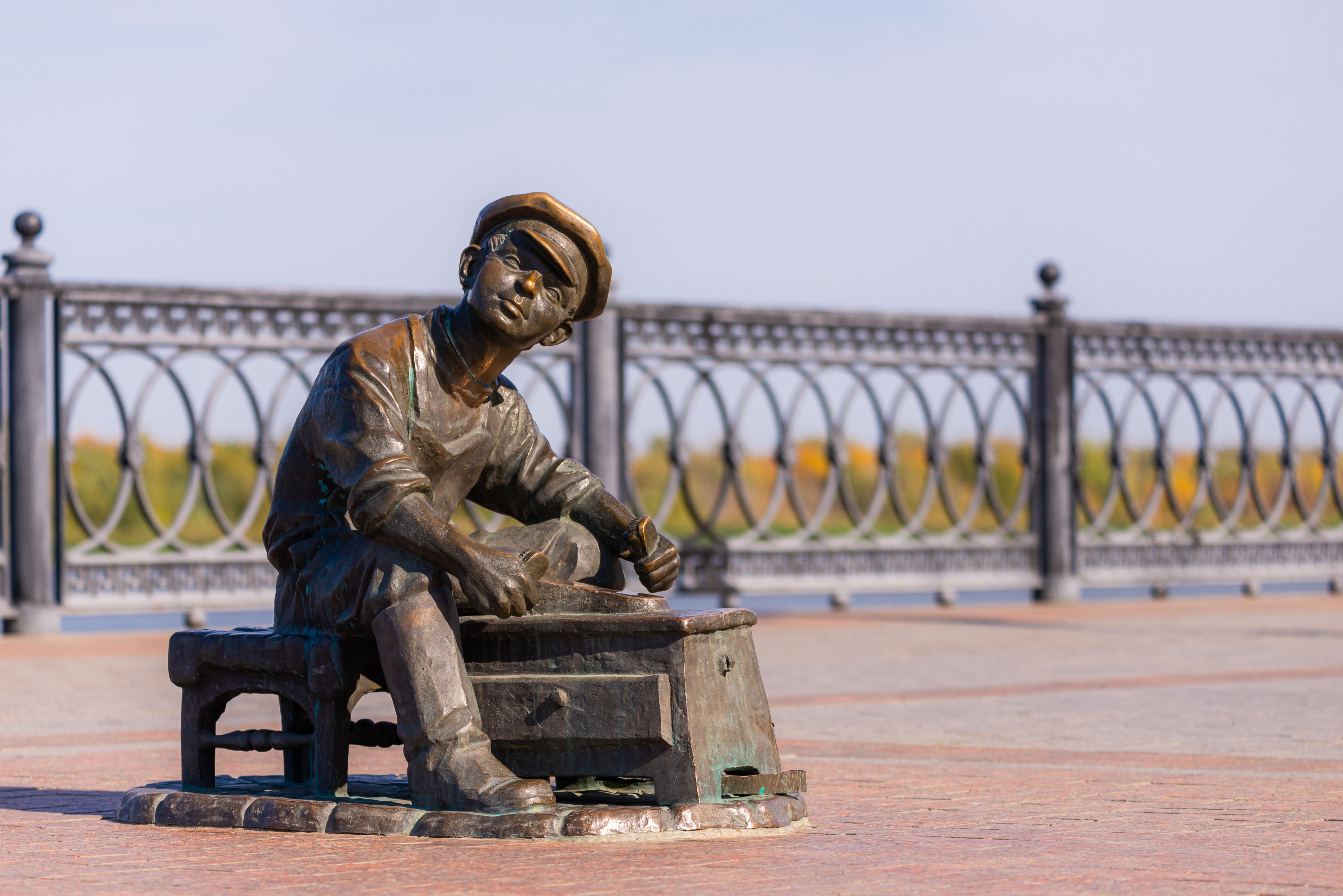
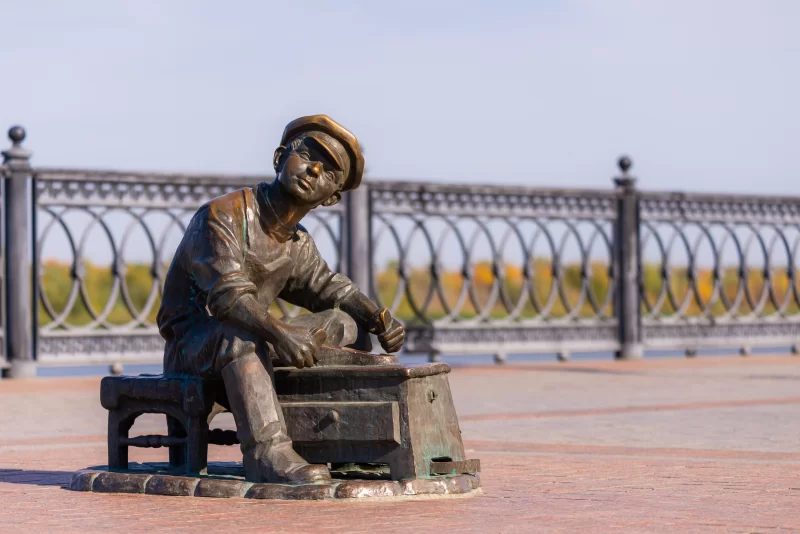
This captivating bronze sculpture of a shoeshine boy is situated in an open urban park, surrounded by the elegant curves of an ornate metal fence and vibrant autumnal foliage that softly blurs into the background. The statue portrays a young boy with meticulous attention to detail — his cap tilted slightly, hands engaged in polishing shoes, posture conveying both concentration and quiet dignity. Bathed in warm natural daylight, the sculpture’s textured bronze surface gleams subtly, revealing intricate details of clothing folds, facial expression, and tool textures that evoke a sense of lived experience. The composition is balanced with symmetrical framing against the fence and ground-level brick pavement, creating visual harmony that anchors the subject while allowing the background to provide context.
The scene’s lighting enhances its emotional resonance — soft sunlight casts gentle shadows across the statue’s form, accentuating its three-dimensional quality and highlighting the patina finish of the bronze. The color palette is rich with earthy tones: warm reds of the brick walkway, muted greens and yellows of distant trees, contrasted by the cool blue of a clear sky overhead. Textural elements are prominent — the roughness of the metal fence juxtaposed with the smooth curves of the boy’s face and hands, and the granular quality of the pavement beneath him all contribute to tactile richness. The sculpture's static nature invites contemplation, as if frozen in a moment of daily labor that speaks volumes about resilience, childhood innocence, or cultural heritage.
The atmosphere evokes deep nostalgia and quiet reverence — this is more than just an art installation; it’s a memorial to forgotten professions or a tribute to the dignity of humble work. The emotional impact arises from its realism: viewers can almost hear the subtle scrape of shoe polish on leather, smell the crisp autumn air, and feel the warmth of the sun on their skin. The composition invites introspection — perhaps reflecting on one’s own past, or honoring those who once served in similar roles. Artistically, it blends classical sculpture techniques with modern urban aesthetics, transforming a simple street scene into an evocative tableau that speaks to universal human experiences — labor, memory, and the quiet beauty of everyday life.
The scene’s lighting enhances its emotional resonance — soft sunlight casts gentle shadows across the statue’s form, accentuating its three-dimensional quality and highlighting the patina finish of the bronze. The color palette is rich with earthy tones: warm reds of the brick walkway, muted greens and yellows of distant trees, contrasted by the cool blue of a clear sky overhead. Textural elements are prominent — the roughness of the metal fence juxtaposed with the smooth curves of the boy’s face and hands, and the granular quality of the pavement beneath him all contribute to tactile richness. The sculpture's static nature invites contemplation, as if frozen in a moment of daily labor that speaks volumes about resilience, childhood innocence, or cultural heritage.
The atmosphere evokes deep nostalgia and quiet reverence — this is more than just an art installation; it’s a memorial to forgotten professions or a tribute to the dignity of humble work. The emotional impact arises from its realism: viewers can almost hear the subtle scrape of shoe polish on leather, smell the crisp autumn air, and feel the warmth of the sun on their skin. The composition invites introspection — perhaps reflecting on one’s own past, or honoring those who once served in similar roles. Artistically, it blends classical sculpture techniques with modern urban aesthetics, transforming a simple street scene into an evocative tableau that speaks to universal human experiences — labor, memory, and the quiet beauty of everyday life.
Resolution
3870 × 2583 pixels -
10.0 megapixels
Date
Oct 13, 2025
Category
Astrakhan