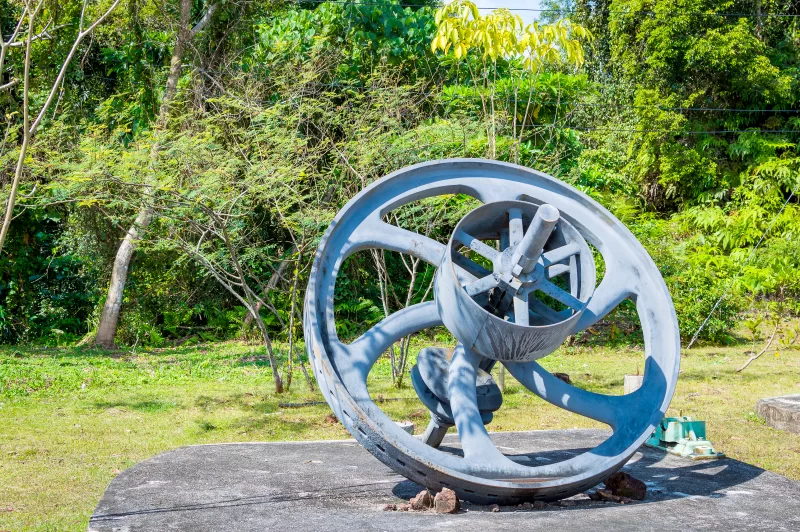
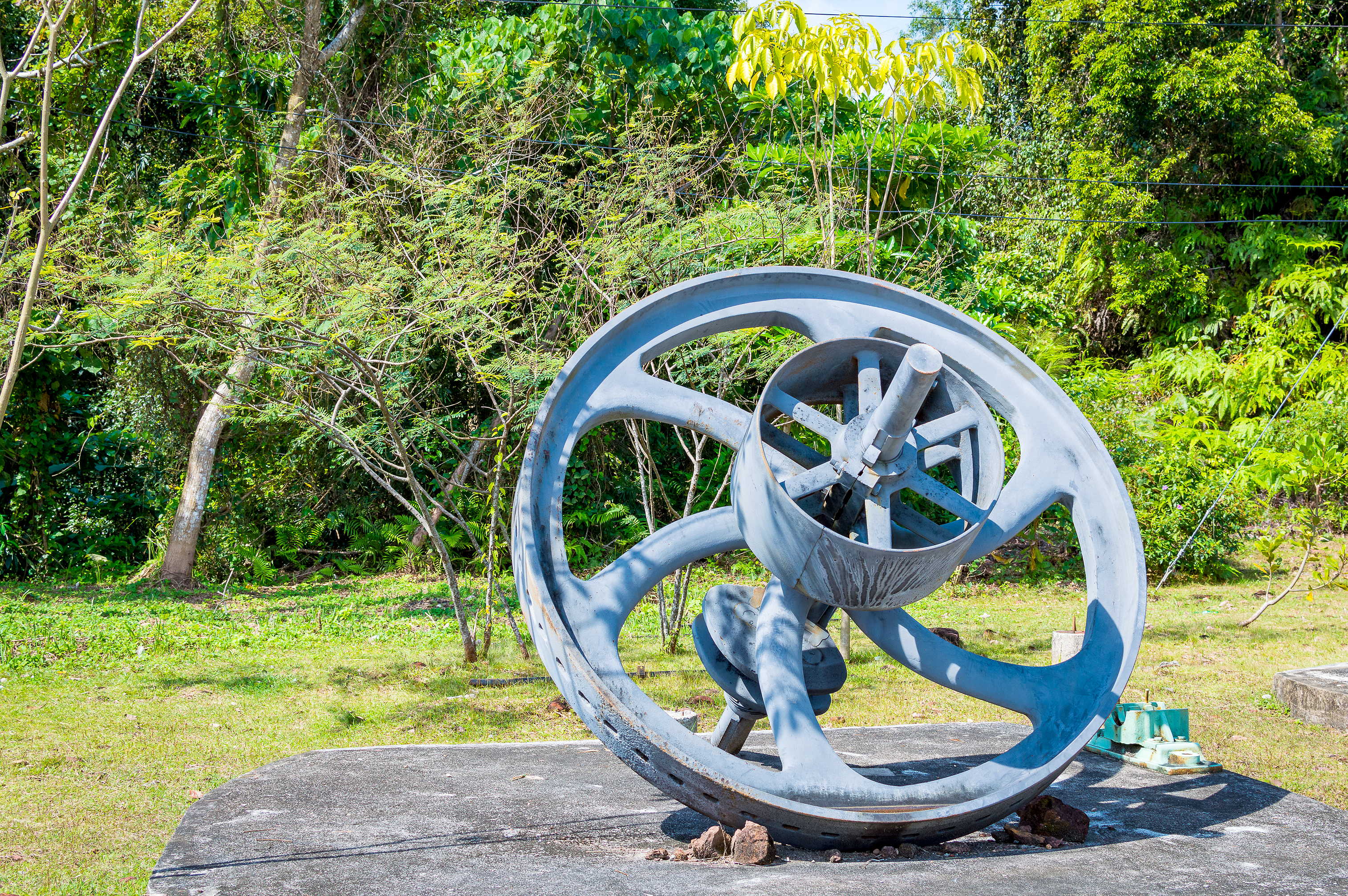
This striking image captures a large, rusted industrial wheel, likely part of an old mechanism used in tin mining operations, resting on a concrete slab surrounded by dense tropical forest. The setting evokes a sense of history and abandonment, where human industry has been overtaken by the relentless embrace of nature. The location appears to be a preserved historical site or heritage park dedicated to showcasing relics from past industrial endeavors. The wheel’s weathered surface tells stories of decades gone by, with peeling paint revealing layers of metallic decay beneath.
The composition is carefully balanced, featuring the circular form of the wheel as the dominant central subject against a backdrop of vibrant green foliage and dappled sunlight filtering through the canopy. Textures contrast sharply — the rough, corroded metal contrasts with the softness of grass and leaves. The lighting is natural and bright, casting long shadows that accentuate depth and dimensionality. Small details like scattered rocks around the base and faint traces of vegetation creeping onto the machinery add authenticity to the scene’s narrative.
The overall atmosphere is one of quiet contemplation and melancholic beauty — a poignant reminder of humanity's transient impact on the environment. There’s an artistic quality here, where decay becomes aesthetic, and nature reclaims its space with grace. The image invites viewers to reflect on industrial heritage while appreciating the harmony between man-made objects and natural surroundings. It resonates strongly as both documentary photography and evocative art, capturing a moment frozen in time that speaks volumes about progress, loss, and renewal.