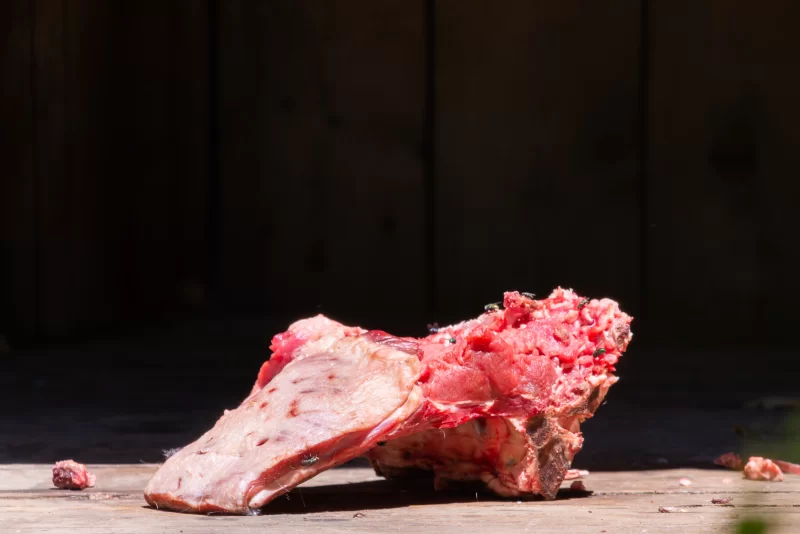
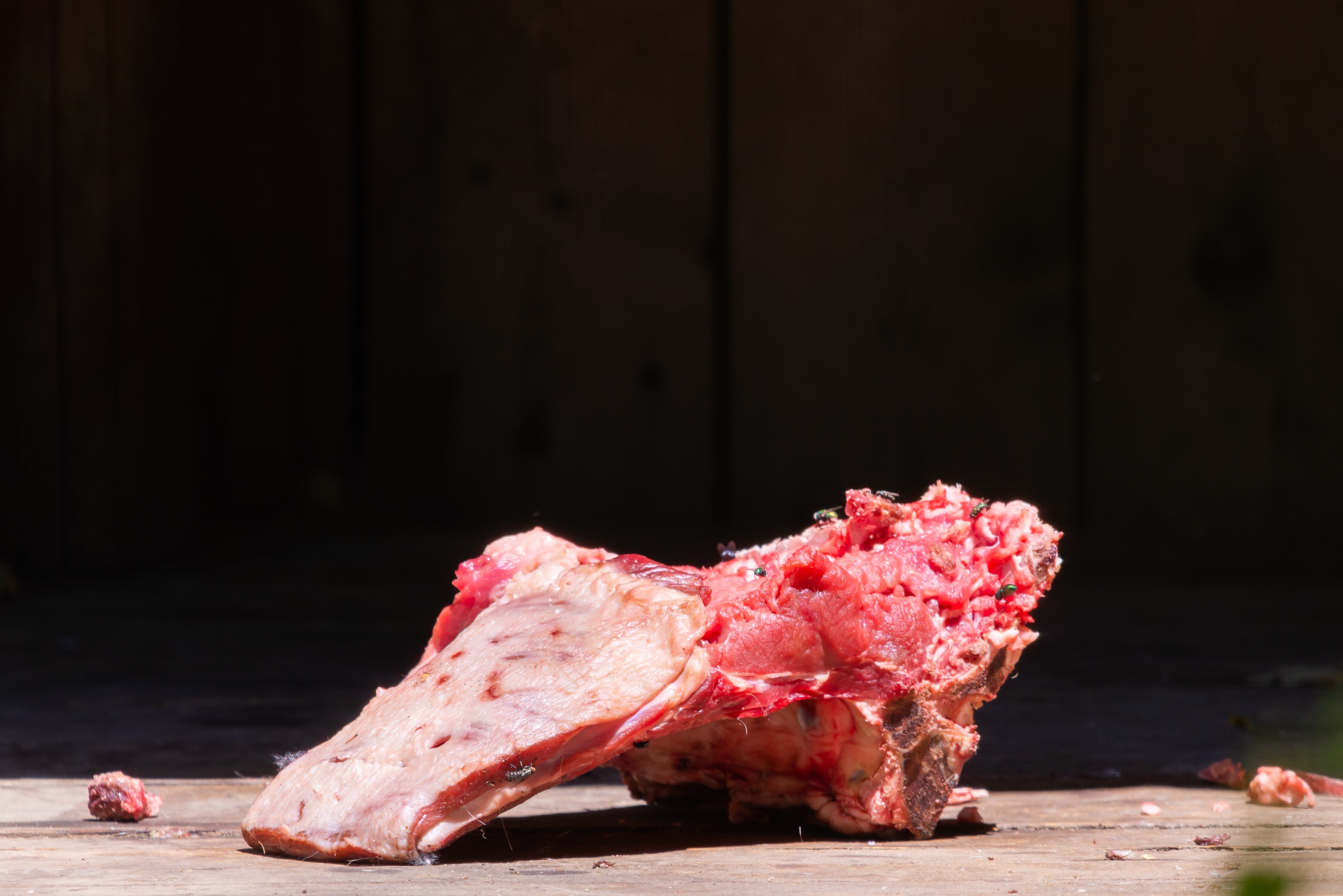
The photograph presents a disturbing yet captivating close-up of a piece of raw meat with bones resting on an old, weathered wooden surface. The camera focuses on the texture of the meat—its moist, grainy surface with clearly visible fibers and fatty streaks. The surrounding background is rough, dark wood, creating a sense of dampness and abandonment, amplifying the overall impression of the scene. The setting appears to be a neglected butcher's shop or perhaps a more somber, industrial context where time has stood still. Possibly, this is a documentary photograph reflecting the harsh reality and inevitable process of decay, evoking complex emotions in the viewer.
The central focus is the piece of meat itself, occupying a large portion of the frame. Its gloomy color – a mix of dark red and brown – contrasts with the lighter tone of the wood on which it rests. The presence of flies adds to the feeling of decline and decomposition; they seem to be part of this scene, emphasizing its undesirable nature. Bones visible within the meat add an extra layer of detail and realism. The texture of the wood is rough and coarse, with noticeable cracks and signs of age – witnesses to many years of use. The lighting is uneven: bright light from above highlights the meat's texture and details, creating a dramatic effect that draws attention to this unusual composition.
The photograph evokes conflicting feelings: revulsion at decay and decline alongside an equally captivating interest in natural detail. The atmosphere is oppressive and gloomy, with a sense of abandonment and desolation. This isn’t just an image of meat; it's an exploration of the themes of time, destruction, and the cyclical nature of life and death. The image could be used to illustrate articles on decomposition, microbiology or even for artistic purposes to create an atmosphere of anxiety and tension. The shooting style is documentary, with no attempts to beautify reality—which makes the photograph particularly powerful and memorable.