Photo info
Description
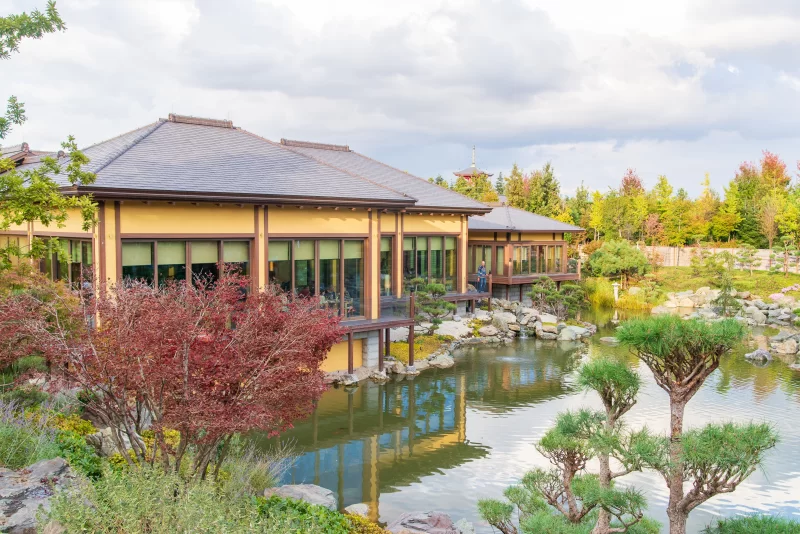
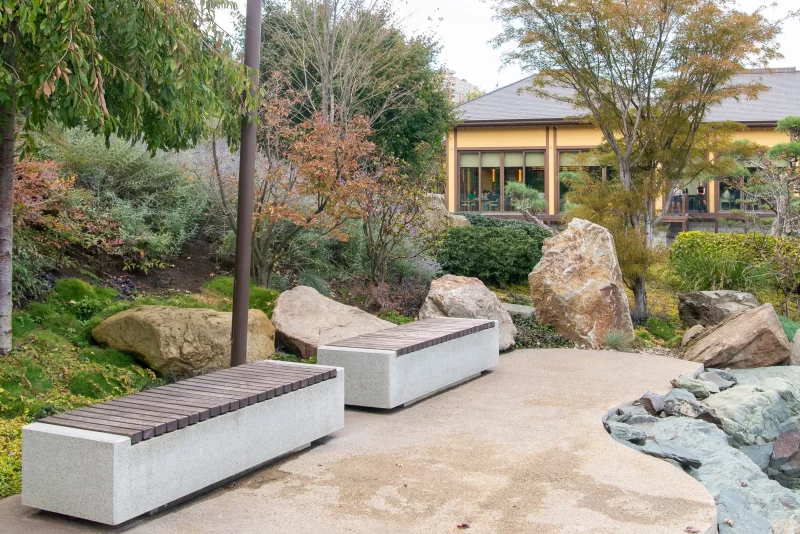
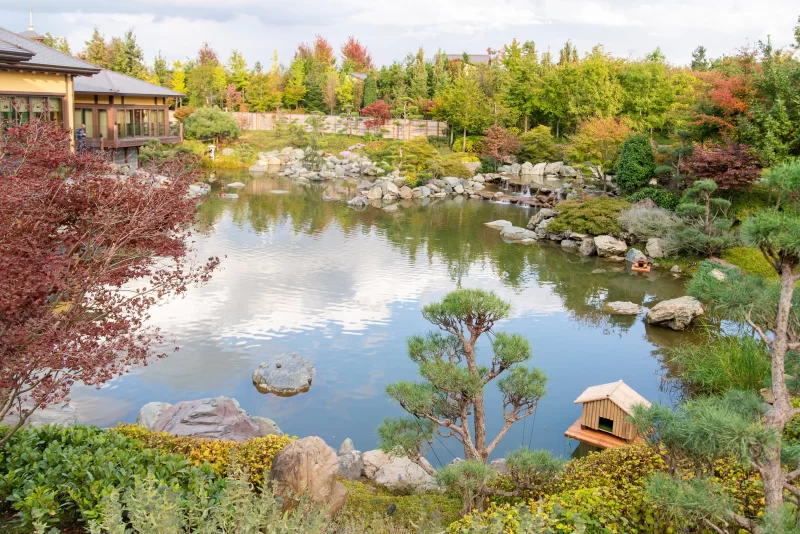
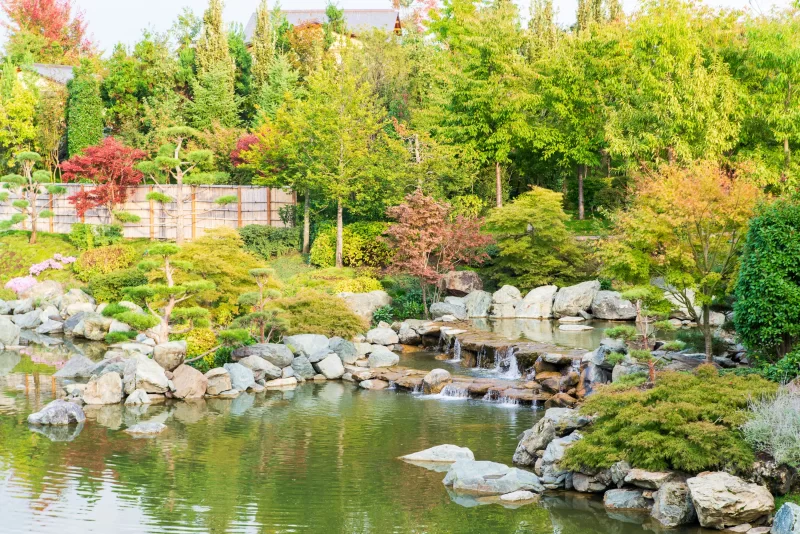
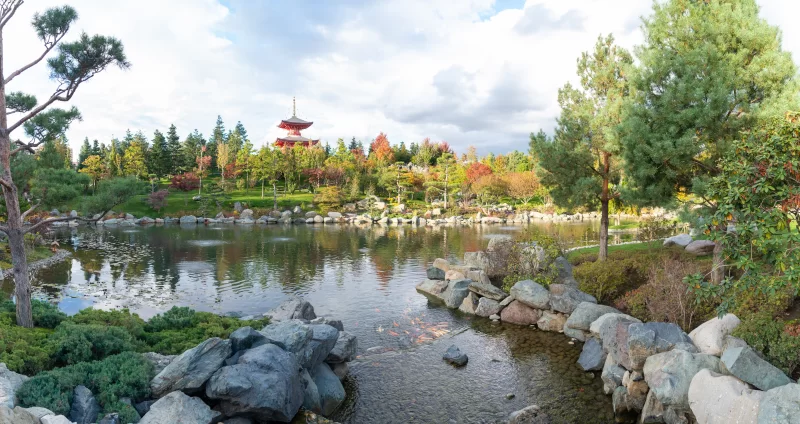
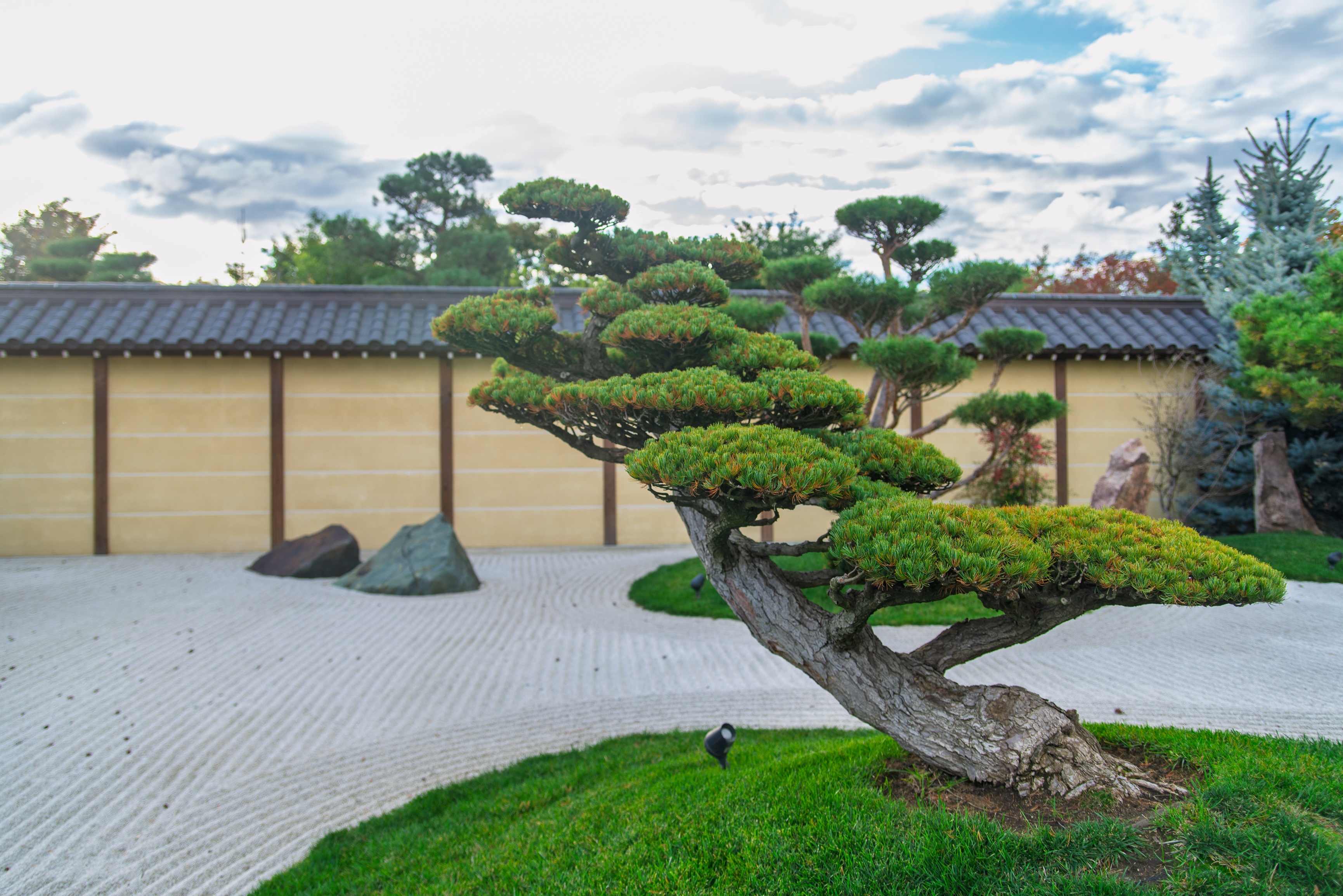
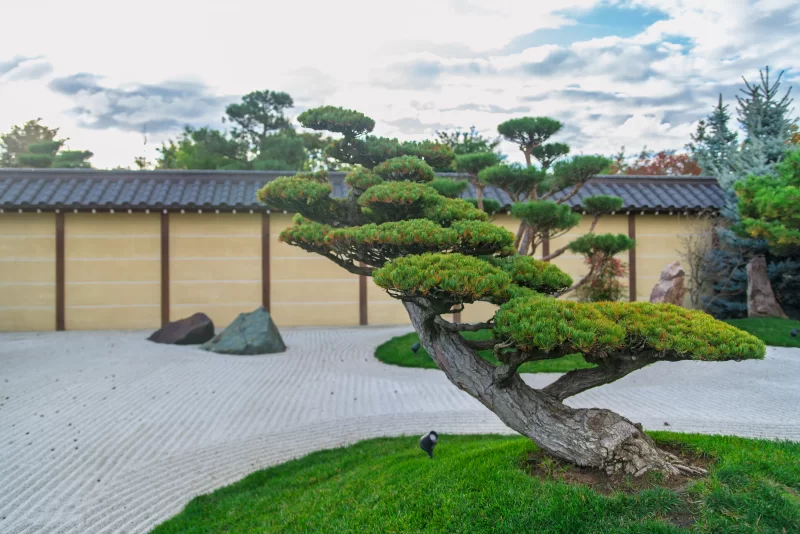
The image depicts a Japanese Zen garden located in the Galiitsky Park in Krasnodar, where a meticulously pruned bonsai tree stands proudly as the central focus. The scene is captured during daytime, under soft, diffused light from a partly cloudy sky, creating a serene and tranquil atmosphere. The bonsai, with its gracefully curved trunk and dense, carefully shaped branches, appears as a work of art embodying the principles of Japanese garden aesthetics. In the background, a hallmark feature of Zen gardens — a raked white gravel surface — symbolizes water or a path, complemented by traditional yellow walls with tiled roofs that lend an authentic Eastern ambiance. Surrounding the bonsai is a well-manicured green lawn that contrasts with the gray gravel, along with several decorative stones that add balance and harmony to the scene. In the distance, other trees and shrubs provide depth and a sense of seclusion.
The composition of the photograph is deliberately structured: the bonsai is positioned on the right side of the frame, allowing viewers to focus on its intricate details — from the aged, cracked bark to the fresh, vibrant green needles. The gravel area, carefully raked into wavy lines, reflects the gardener’s skill, with its white color contrasting against the lush green grass and darker tones of the surrounding trees. The walls in the background are rendered in warm beige-yellow hues, contributing to a calming and restrained aesthetic. Textures vary widely: the smooth, almost matte gravel, the rough bark of the tree, the lush and soft foliage, and the coarse surfaces of the stones. The lighting is gentle and diffused, avoiding harsh shadows, which emphasizes the calmness and subtlety of the scene. Details such as a small bird on the grass or individual stones add life and realism to the image.
The atmosphere of the photograph evokes a profound sense of harmony, peace, and tranquility, characteristic of Zen gardens. Visually, it invites a feeling of quietude, meditation, and inner equilibrium. The emotional response is one of calmness, absence of chaos, and a call to mindfulness and appreciation of nature’s beauty. Artistic qualities include a minimalist approach, emphasis on symmetry and balance, use of natural light to create a soft, neutral tone, and a restrained color palette dominated by natural hues — green, gray, beige. The style of the image is a classic Eastern garden portrait, where every element has its own meaning and place, and where nature and architecture merge into a unified whole, creating a space for spiritual rest and contemplation.
The composition of the photograph is deliberately structured: the bonsai is positioned on the right side of the frame, allowing viewers to focus on its intricate details — from the aged, cracked bark to the fresh, vibrant green needles. The gravel area, carefully raked into wavy lines, reflects the gardener’s skill, with its white color contrasting against the lush green grass and darker tones of the surrounding trees. The walls in the background are rendered in warm beige-yellow hues, contributing to a calming and restrained aesthetic. Textures vary widely: the smooth, almost matte gravel, the rough bark of the tree, the lush and soft foliage, and the coarse surfaces of the stones. The lighting is gentle and diffused, avoiding harsh shadows, which emphasizes the calmness and subtlety of the scene. Details such as a small bird on the grass or individual stones add life and realism to the image.
The atmosphere of the photograph evokes a profound sense of harmony, peace, and tranquility, characteristic of Zen gardens. Visually, it invites a feeling of quietude, meditation, and inner equilibrium. The emotional response is one of calmness, absence of chaos, and a call to mindfulness and appreciation of nature’s beauty. Artistic qualities include a minimalist approach, emphasis on symmetry and balance, use of natural light to create a soft, neutral tone, and a restrained color palette dominated by natural hues — green, gray, beige. The style of the image is a classic Eastern garden portrait, where every element has its own meaning and place, and where nature and architecture merge into a unified whole, creating a space for spiritual rest and contemplation.
Resolution
3461 × 2310 pixels -
8.0 megapixels
Date
Oct 27, 2025
Category
Krasnodar