Photo info
Description
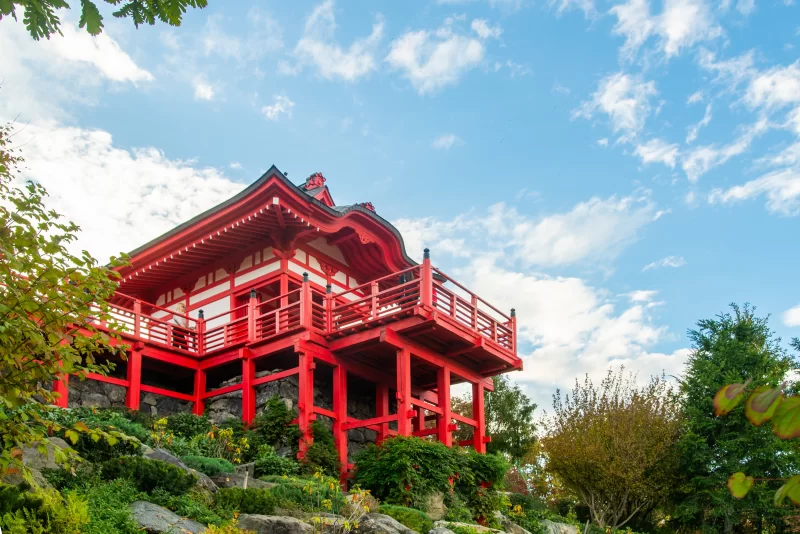
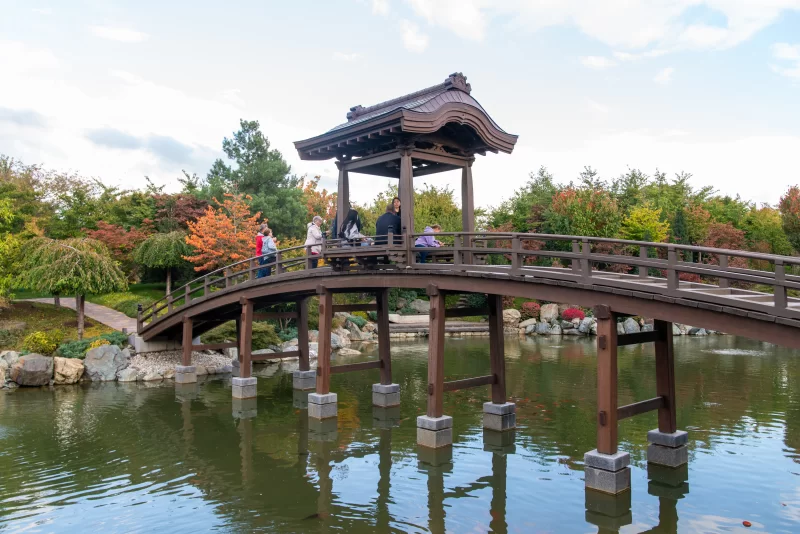
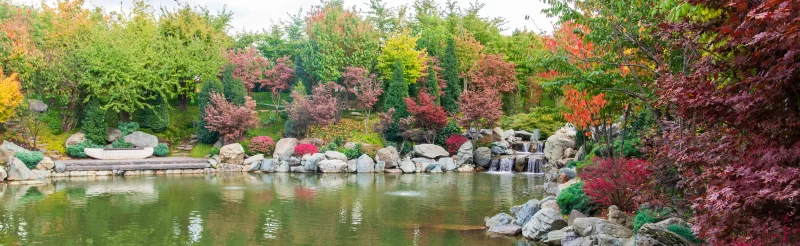
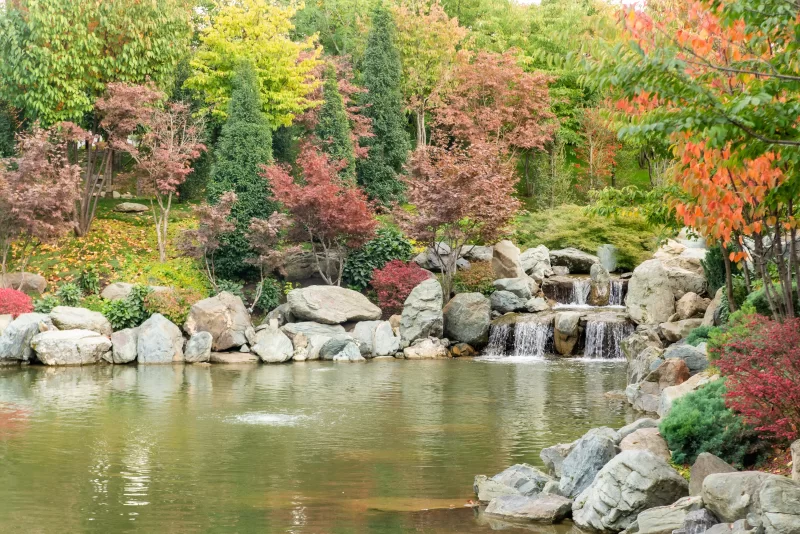
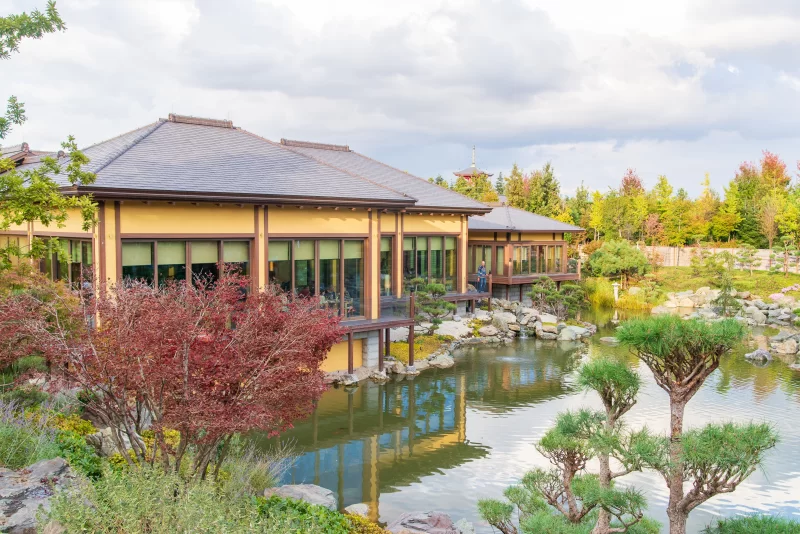
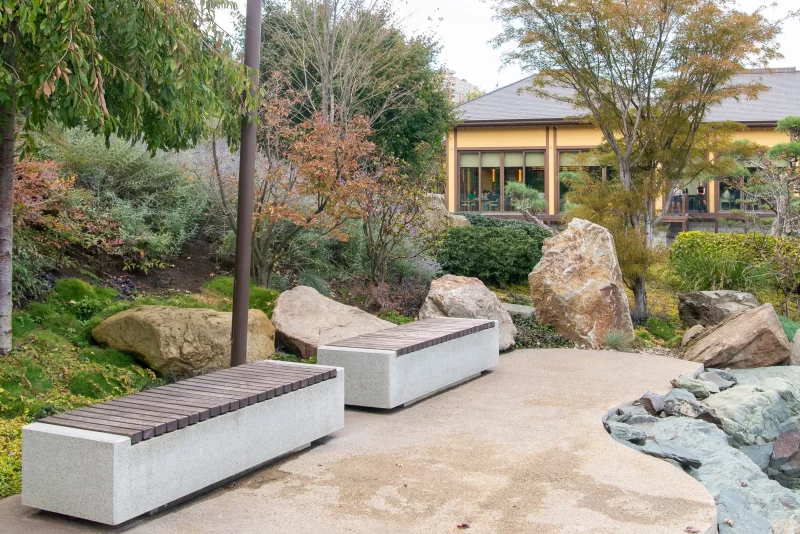
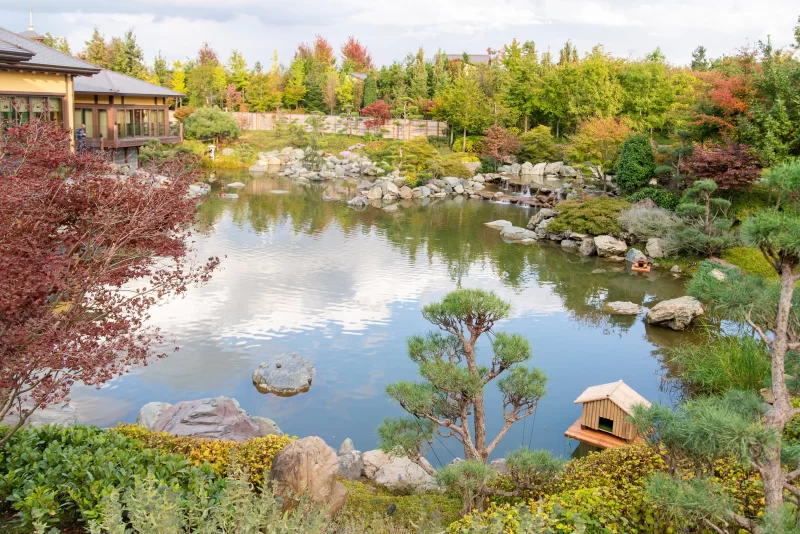
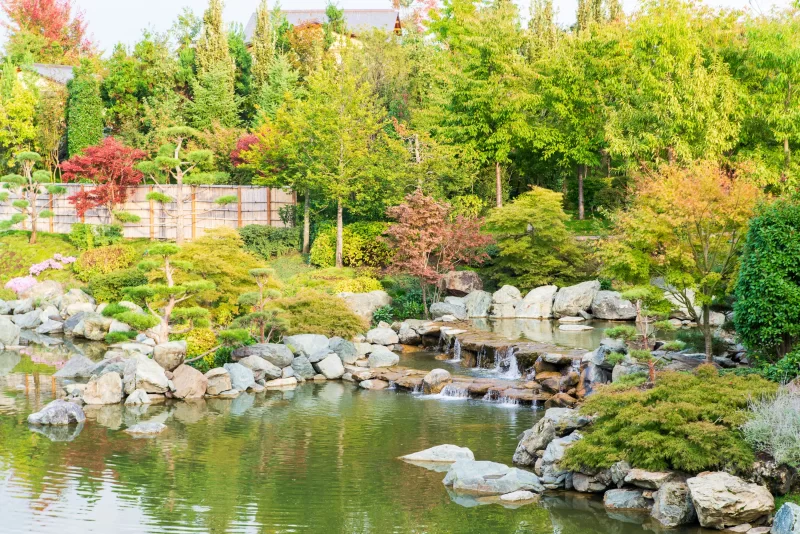
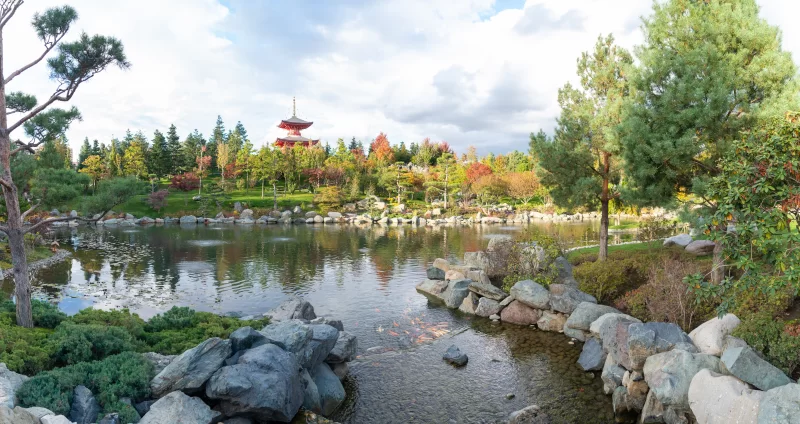
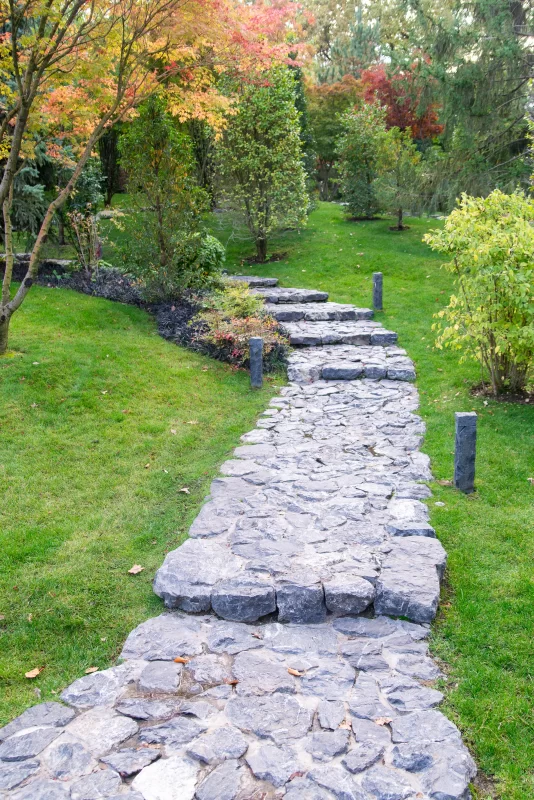
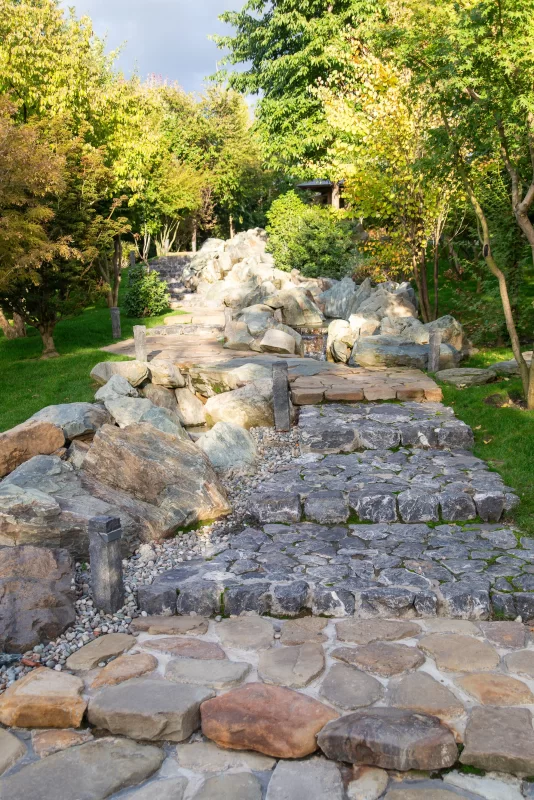
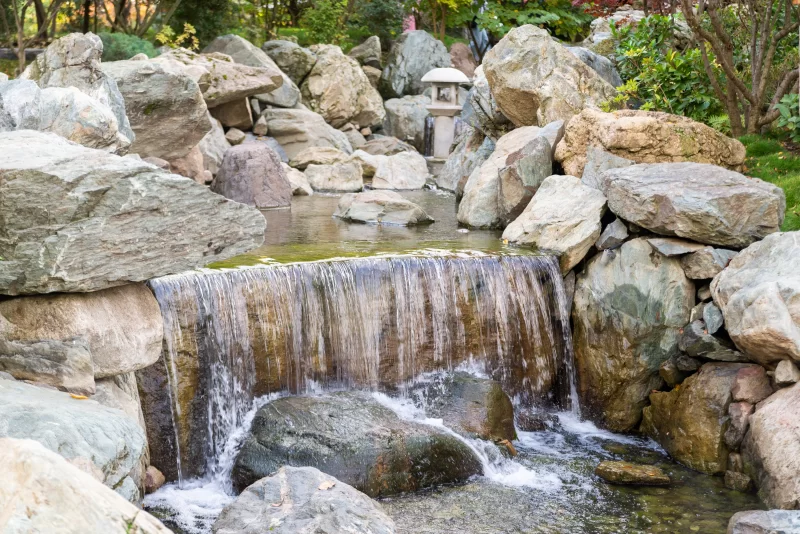
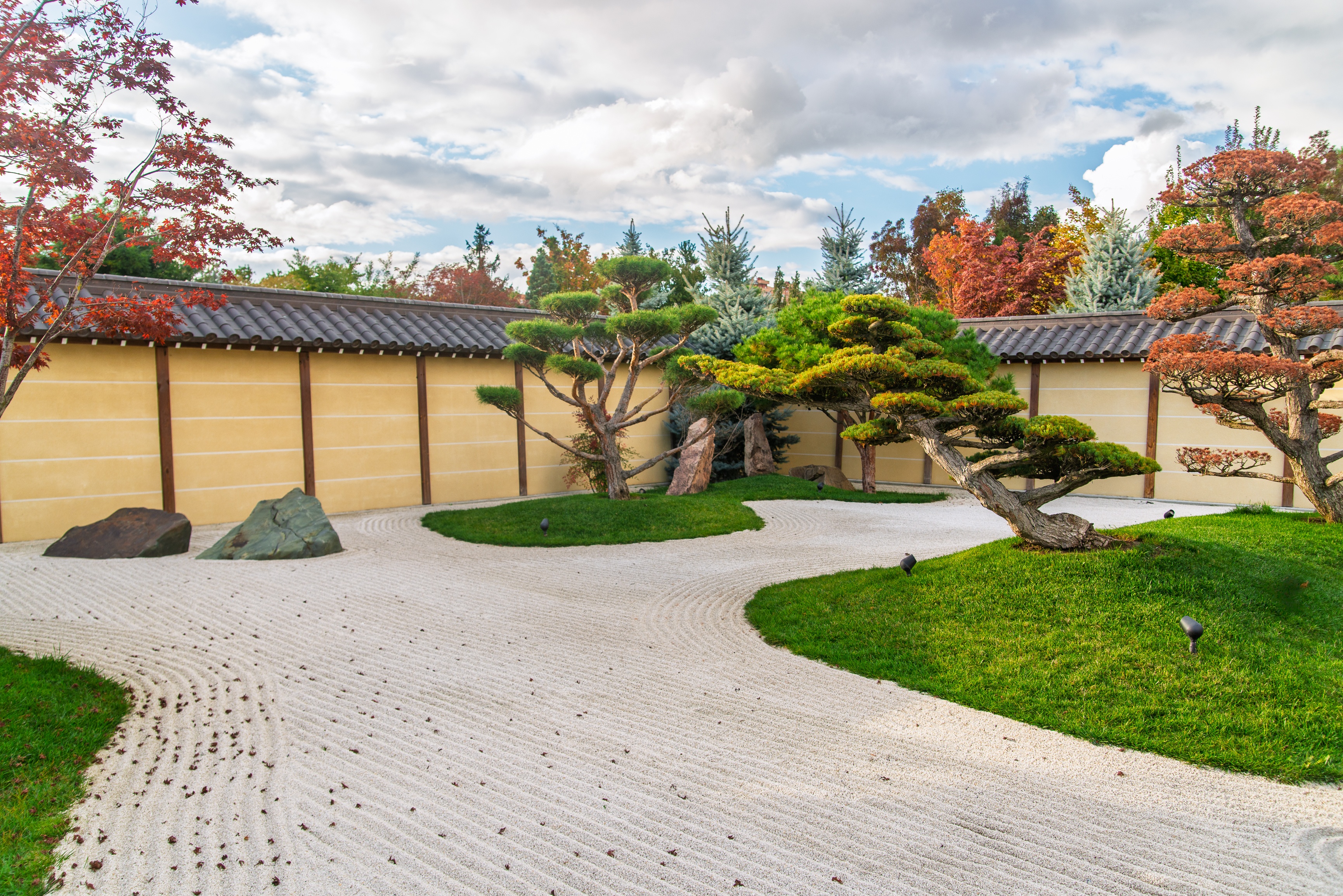
This image depicts a meticulously designed Japanese Zen garden located in the Galitsky Park in Krasnodar, showcasing traditional Japanese garden aesthetics. The scene is captured on an autumn day, with a partly cloudy sky that casts soft, diffused light over the landscape, and trees displaying vibrant red and orange foliage that evokes a sense of tranquility and harmony. The garden’s design emphasizes the balance between nature and human artistry: finely raked white river sand contrasts with lush green lawns and precisely trimmed trees. At the center, large rocks symbolize mountains or natural elements, while gracefully shaped trees, pruned into classic Japanese forms, add structure and elegance. The garden is enclosed by a wall with wooden supports and a tiled roof, seamlessly integrated into the overall composition. Around, rare species of trees, including conifers and evergreens, add depth and textural variety to the scene.
The composition of the garden is built with strict symmetry and harmony: the white sand, raked into spiraling and wavy patterns, appears like a textured canvas spread across the ground, with a smooth, almost matte surface that highlights attention to detail. The vivid green lawns contrast sharply with the neutral tones of the walls and sand. The trees, shaped into domes or wave-like forms, have smooth trunks and dense crowns adorned with bright green or orange leaves. The lighting is soft and diffused, characteristic of an overcast sky, creating delicate interplay of light and shadow on the sand and foliage. Materials — sand, stone, wood, and lawn — are all executed with high precision and minimalism. Even small details, such as decorative lamps on the lawn, add subtle sophistication and functionality to the design.
The atmosphere of the garden is serene, meditative, and inviting for inner peace. Visually, it evokes ancient Zen-Buddhist practices where nature and space serve as tools for spiritual reflection. The emotions it evokes — tranquility, awe, quiet joy from order and harmony — are deeply felt. Artistic features include minimalism, strict composition, emphasis on nature, and restrained color palettes. The use of contrasts — white sand, green lawns, red trees, and neutral wall tones — creates visual harmony that visually relaxes and soothes the viewer. The garden’s design is not merely decorative but a holistic work of art crafted for spiritual and aesthetic appreciation, making it an ideal place for meditation, contemplation, or simply enjoying quiet beauty and natural serenity.
The composition of the garden is built with strict symmetry and harmony: the white sand, raked into spiraling and wavy patterns, appears like a textured canvas spread across the ground, with a smooth, almost matte surface that highlights attention to detail. The vivid green lawns contrast sharply with the neutral tones of the walls and sand. The trees, shaped into domes or wave-like forms, have smooth trunks and dense crowns adorned with bright green or orange leaves. The lighting is soft and diffused, characteristic of an overcast sky, creating delicate interplay of light and shadow on the sand and foliage. Materials — sand, stone, wood, and lawn — are all executed with high precision and minimalism. Even small details, such as decorative lamps on the lawn, add subtle sophistication and functionality to the design.
The atmosphere of the garden is serene, meditative, and inviting for inner peace. Visually, it evokes ancient Zen-Buddhist practices where nature and space serve as tools for spiritual reflection. The emotions it evokes — tranquility, awe, quiet joy from order and harmony — are deeply felt. Artistic features include minimalism, strict composition, emphasis on nature, and restrained color palettes. The use of contrasts — white sand, green lawns, red trees, and neutral wall tones — creates visual harmony that visually relaxes and soothes the viewer. The garden’s design is not merely decorative but a holistic work of art crafted for spiritual and aesthetic appreciation, making it an ideal place for meditation, contemplation, or simply enjoying quiet beauty and natural serenity.
Resolution
3461 × 2310 pixels -
8.0 megapixels
Date
Oct 27, 2025
Category
Krasnodar